How to Spot Odometer Rollbacks and Mileage Fraud: Physical Clues & AI Checking
TL;DR Summary"Used car mileage tampering is a common fraud to boost resale value. Protect yourself by analyzing cabin wear, checking CARFAX history logs, using OBD-II diagnostics, and leveraging Arabal AI visual checks."
1. Topic Context & Definition
Odometer rollback is the illegal manipulation of a vehicle's odometer to display a lower mileage than the car has actually traveled, deceiving buyers about its true condition.
Why Used Car Mileage Tampering is Still a Major Risk
Despite the transition from mechanical to digital odometers, mileage fraud remains highly prevalent in the used car market. Unscrupulous sellers can bypass digital security systems using cheap OBD-II diagnostic tools and mileage adjustment software. Because a lower mileage reading significantly inflates a vehicle's resale value, buyers must look beyond the dashboard numbers to verify a car's true history.
Physical Clues: The Tell-Tale Signs of High Mileage
An altered odometer can lie, but physical wear patterns cannot. Look for these critical wear indicators: - **Pedal Wear**: Rubbed-down rubber or metal showing on brake, clutch, or gas pedals usually indicates a vehicle has driven well over 100,000 km (60,000 miles). - **Steering Wheel and Gear Shifter**: Shiny, sticky, or worn-down leather on the steering wheel or shifter boot is a clear indicator of heavy daily usage. - **Seat Bolsters and Cushions**: Sagging seat cushions, worn fabric, or cracked leather on the driver's side seat bolsters suggest the vehicle has had frequent and long-term use. - **Tire Date Codes (DOT)**: Check the 4-digit tire manufacturing date code. If a car with an allegedly low mileage (e.g., 30,000 km) has replaced tires, or tires that are heavily worn and mismatched, the mileage is likely tampered with.
Verifying the Paper Trail: Service History and National Databases
Documentation is your primary defense against odometer fraud. Cross-reference records through these sources: - **Vehicle History Reports (CARFAX / AutoCheck / HPI)**: These services collect mileage logs from insurance companies, emission test facilities, and registration offices. Look for sudden drops or stagnations in the mileage timeline. - **Service Booklets and Invoices**: Check the timestamps on oil changes, timing belt replacements, and brake services. Look for consistent increments. If a service sticker under the hood displays a higher mileage than the odometer, you have caught the fraud.
Modern Detection: OBD-II Diagnostics and ECU Inspection
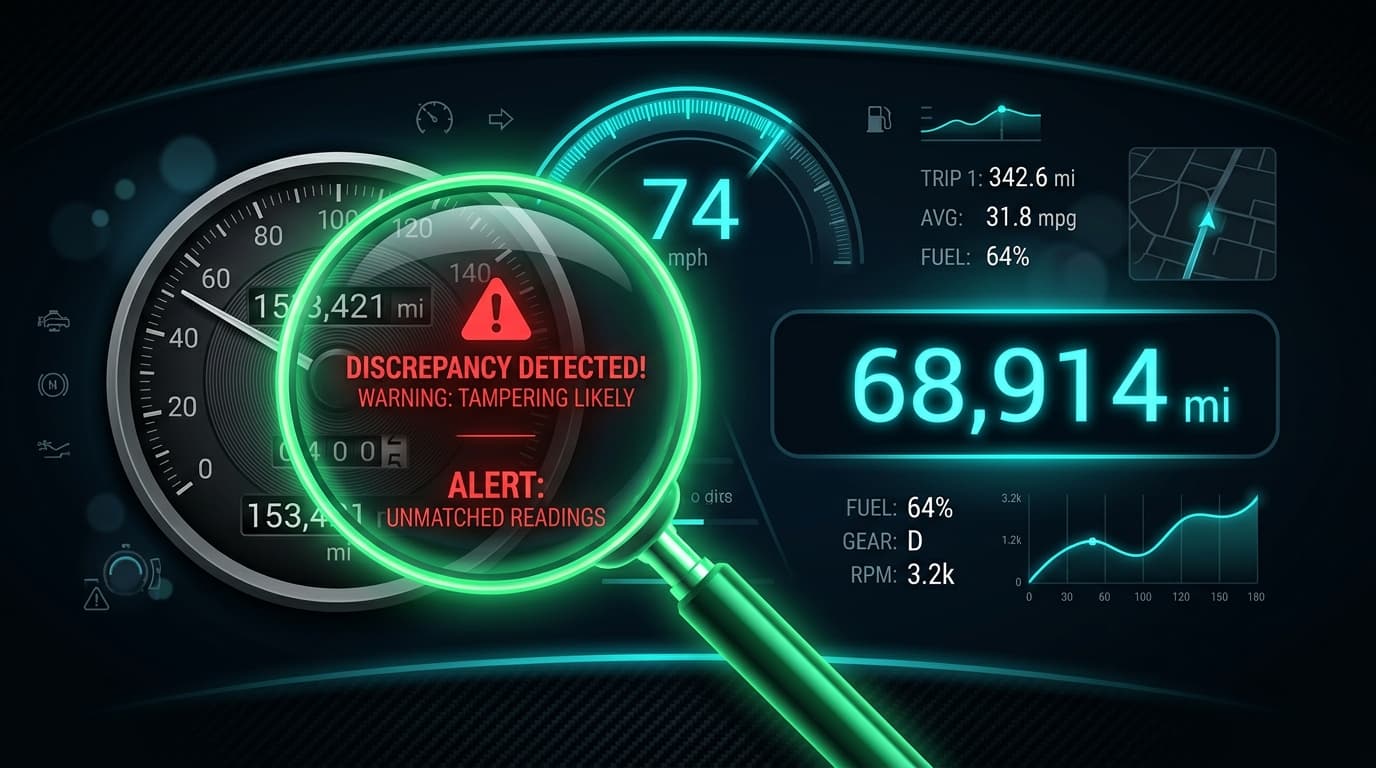
When a fraudster rolls back the odometer, they often alter the main dashboard control module but forget that modern vehicles store mileage data in multiple locations. Using an OBD-II scanner, you can read mileage registers stored in the Engine Control Unit (ECU), Transmission Control Module (TCM), and ABS sensors. If these values do not match the dashboard, the odometer has been rolled back.
Additionally, Arabal AI's computer vision analyzes interior photos to grade steering wheel and pedal wear. The system compares the visual wear against the seller's claimed mileage using statistical models of vehicle depreciation, highlighting high-risk listings instantly.
| Detection Method | Cost | Accuracy | Time Required |
|---|---|---|---|
| Physical Wear Check | Free | Medium (60%) | 15 Mins |
| History Report (CARFAX) | Low / Paid | High (90%) | 5 Mins |
| OBD-II ECU Scan | Medium / PPI Fee | Very High (98%) | 20 Mins |
| Arabal AI Visual Check | Free / Low Credits | Very High (95% - Pre-screen) | Instant |