How to Spot a Flood Damaged Car: Hidden Rust, Mildew, and Electrical Failures
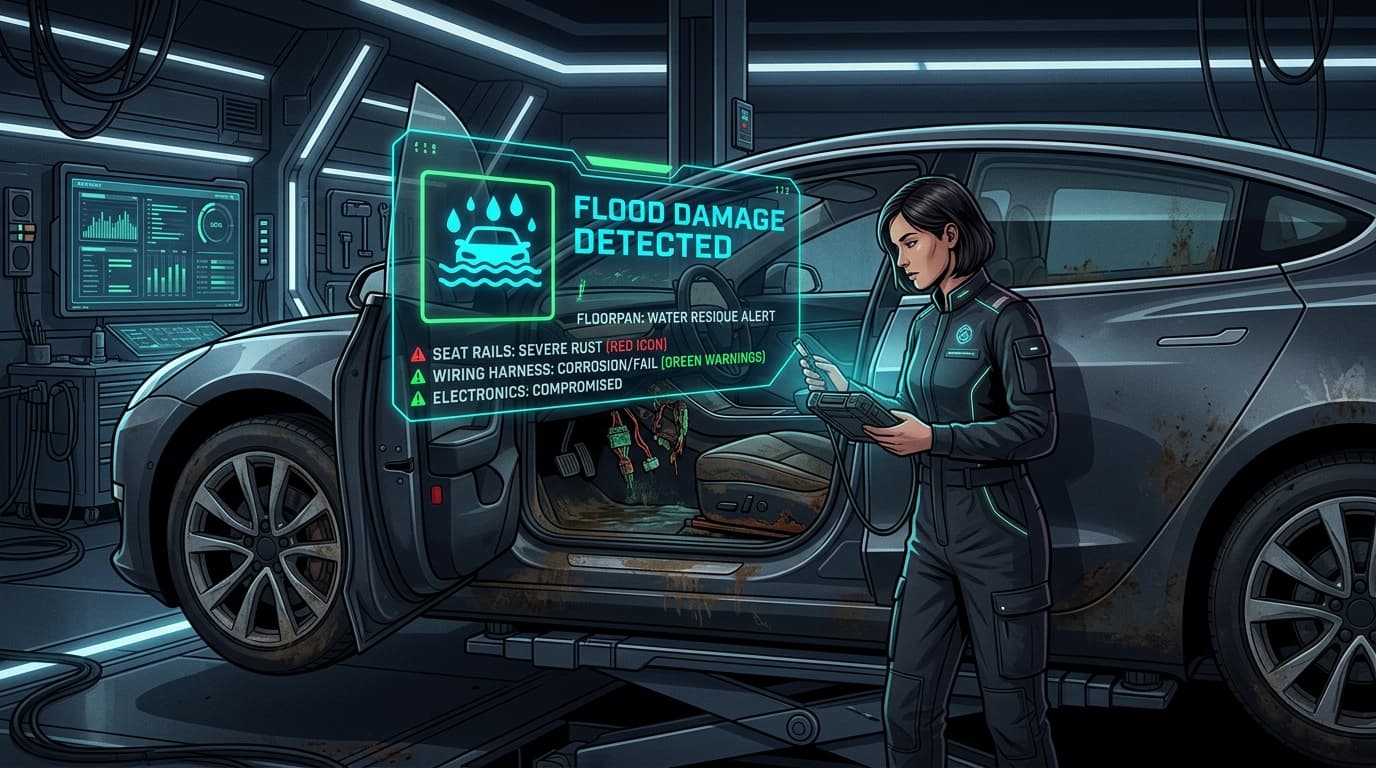
TL;DR Summary"Flood-damaged vehicles can look pristine on the outside, but their electrical systems and chassis are ticking time bombs. Check for damp carpets, hidden rust under seats, and electrical malfunctions."
1. Topic Context & Definition
A flood-damaged car is a vehicle that has been submerged in water to a level that damages its electrical components, interior upholstery, and mechanical systems, leading to severe corrosion and safety risks.
The Hidden Danger of Submerged Used Cars
Every year, thousands of vehicles are caught in heavy rainstorms, hurricanes, or local flooding. While insurance companies write off many of these as total losses, some flood-damaged cars are dry-cleaned, cosmetically restored, and sold to unsuspecting used car buyers. A flood-damaged car might look clean on the lot, but beneath the surface, it is a ticking time bomb of corroded wiring, failing safety systems, and hidden structural rust.
1. The Sniff Test: Identifying Mildew and Excess Perfume
One of the most reliable ways to spot a flooded car is by using your sense of smell.
- **Musty and Mildew Odors:** When water saturates seat foam and carpeting, it creates a persistent musty smell. If you detect even a faint scent of mold, be highly suspicious. - **Scent Masking:** Be wary of cars that have an overwhelming scent of air fresheners, deodorizers, or chemical cleaning agents. Sellers often use these to mask the stubborn smell of damp fabric. - **Damp Carpets:** Run your hands along the lowest points of the carpet, especially under the floor mats, pedal wells, and under the front seats. Feel for cold spots or hidden dampness.
2. Inspecting for Hidden Rust and Corrosion
While external body panels are painted and protected, many interior components use raw, unpainted metal.
- **Seat Rails and Springs:** Slide the seats fully forward and backward. Inspect the metal rails, mounting bolts, and springs underneath. Any signs of flaking rust or corrosion are strong indicators of water submersion. - **Under-Dash Support Brackets:** Get under the dashboard with a flashlight. Look at the steering column and the metal brackets supporting the dash. If you see rust or a white chalky residue, the car has likely been underwater. - **Pedal Assemblies:** Check the metal rods and hinges of the brake, gas, and clutch pedals for pitting rust.
3. Chronic Electrical Malfunctions
Modern cars rely heavily on complex wiring harnesses and Electronic Control Units (ECUs). Water intrusion leads to slow-growing corrosion that eventually breaks connections or causes short circuits.
- **Instrument Cluster Warning Lights:** Turn the ignition key to the "on" position. Ensure all warning lights (like SRS airbag, ABS, and check engine) illuminate during the bulb check. If a light fails to turn on, a shady seller might have pulled the bulb to hide a permanent error. - **Electronic Accessory Check:** Test every single button and switch. Roll the windows up and down, adjust the power seats, turn on the heated seats, test the infotainment system, and switch on the headlights and wipers. Erratic behavior is a clear sign of corroded contacts. - **Diagnostic Trouble Codes (DTCs):** Plug an OBD-II scanner into the car's diagnostic port. Look for communication errors (U-codes) which indicate that control modules are struggling to talk to each other due to corroded wiring.
4. Mechanical Checkpoints and Hidden Mud
Silt and mud from floodwaters get trapped in hard-to-reach places that cosmetic detailing cannot clean.
- **Engine Oil Assessment:** Pull the engine oil dipstick. If the oil is milky, cloudy, or resembles a chocolate milkshake, water has contaminated the engine block. Running such an engine can lead to catastrophic failure. - **Tight Crevices and Compartments:** Look inside the glove box, the spare tire well, under the hood hinges, and inside the alternator crevices. Detailing crews rarely clean these spots, leaving behind silt, sand, or dried mud lines. - **Condensation in Lights:** Check the headlights, taillights, and turn signals for trapped water droplets or dirt lines inside the lenses.
| Inspection Point | Normal Wear & Tear | Flood Damage Indicator |
|---|---|---|
| Interior Smell | Neutral or typical leather/fabric scent. | Strong musty/moldy odor or excessive masking perfume. |
| Unpainted Metal Brackets | Clean metal surfaces, minimal surface dust. | Rust flakes, pitting, or white powdery corrosion under the dash. |
| Electrical Accessories | Consistent operation across all functions. | Erratic window motors, malfunctioning screens, or dead modules. |
| Engine Oil Condition | Clear amber or dark black fluid. | Milky, frothy, or chocolate-milk-like appearance. |
| Hidden Recesses | Dry dust or normal road grime. | Silt, sand, or dried mud deposits in the spare tire well or alternator. |